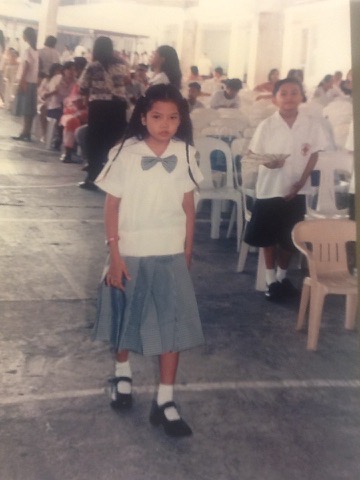
Two Fires,
One Ridge.
This is the story of how a girl from the mango groves of Zambales and a boy from the mountain's foot in Nyeri found each other—and chose to build their life on a volcanic ridge overlooking the most unlikely lake in the world.


Two Beginnings
Zoë grew up in Amungan—the largest barangay in Iba, the capital of Zambales province. It's a west-coast town where 173 kilometres of shoreline face the South China Sea, where fishermen have launched their boats for centuries, and where the sunsets paint the sky in colours that don't exist anywhere else. Behind the town, the Zambales mountain range rises sharply—and behind that, the shadow of Mount Pinatubo.
The Aeta people—among the earliest inhabitants of the Philippines, who crossed from Borneo over 20,000 years ago—have called these mountains home since before recorded history. When Pinatubo erupted in 1991 in the second-largest eruption of the 20th century, it displaced 20,000 Aeta highlanders and buried Zambales under volcanic ash. But the ash became the soil. And that soil grows the sweetest mangoes on Earth.
The Aeta—among the earliest inhabitants of the Philippines
The Sweet Elena—a carabao mango strain from Zambales—was scientifically confirmed as the sweetest mango variety in the Philippines by the Bureau of Agricultural Research. The carabao mango itself holds the 1995 Guinness World Record as the sweetest mango in the world. The secret? Pinatubo's volcanic soil.
Mount Pinatubo crater lake, Zambales—formed after the 1991 eruption that sent ash 40 km into the atmosphere and lowered global temperatures by 0.5°C.
Iba, Zambales—where the South China Sea meets the mountains
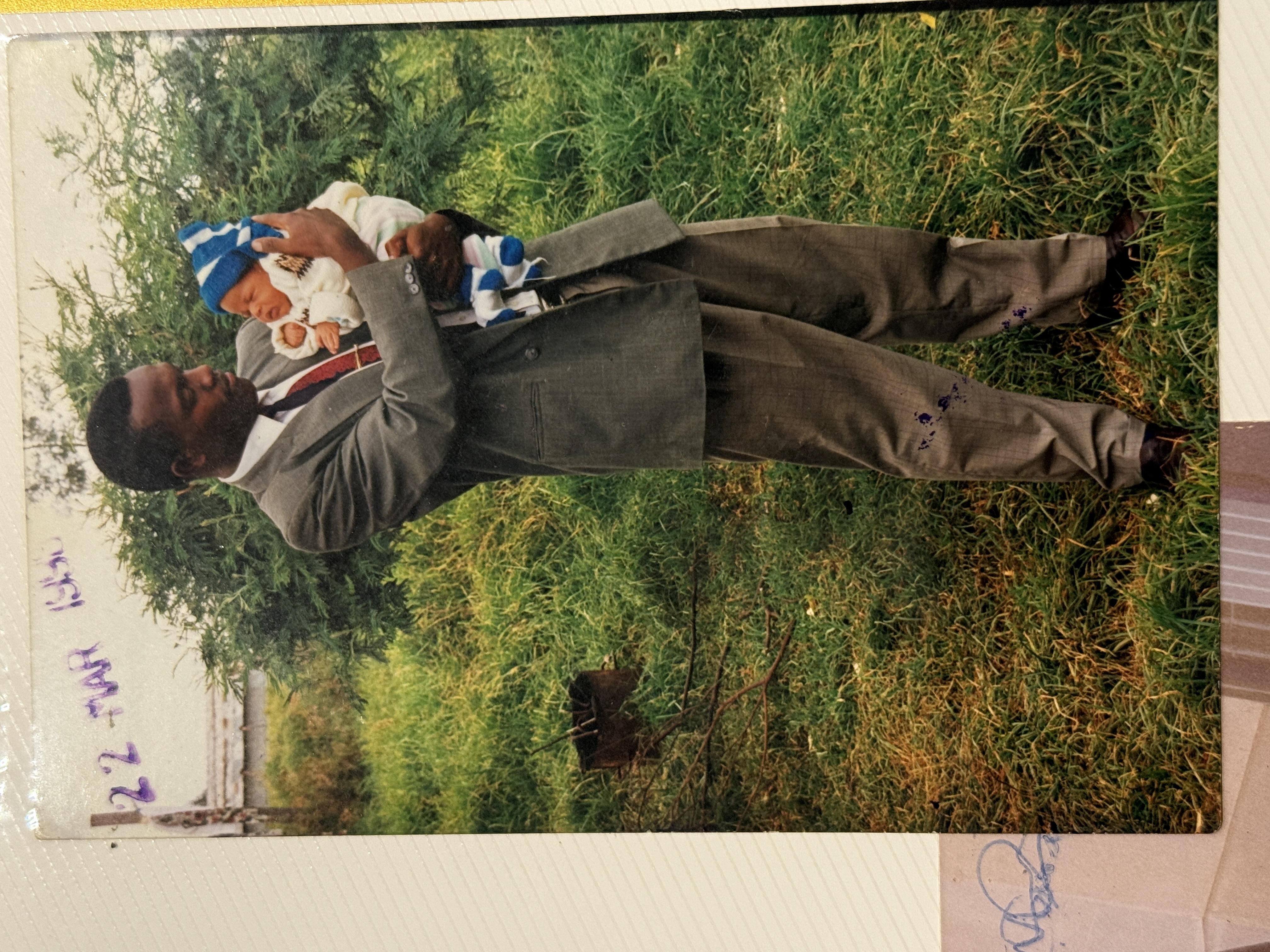
George grew up at the mountain's foot—in Nyeri County, named from the Maasai word nyiro meaning "red," for the rich volcanic soil that colours the highlands. Karatina sits at 1,750 metres, in the shadow of Mount Kenya—or Kirinyaga in Gikuyu, meaning "the one with the ostrich," a poetic description of the snow-capped peak's resemblance to an ostrich bending with its white tail raised. The country itself is named after this mountain.
Karatina is home to one of the largest open-air markets in East Africa. It was named after the muratina tree—the sausage tree beneath which Gikuyu women first gathered to trade crafts and food in pre-colonial times. Today, over 2,000 traders operate from 4 AM to 10 PM selling everything from SL28 coffee cherries to ciondos (sisal-woven baskets). The Gikuyu people—Kenya's largest ethnic group—have called these highlands home since Ngai, their God, shaped the first man and woman from the red soil beneath a sacred fig tree at the foot of Kirinyaga.
Nyeri was the heartland of the Mau Mau uprising against British colonial rule. Dedan Kimathi—born in Tetu, Nyeri County in 1920—led the Kenya Land and Freedom Army from the forests of Mount Kenya and the Aberdares, transforming scattered fighters into a structured guerrilla force. He was captured in October 1956 and executed in February 1957. His university now stands in Nyeri. His statue stands in the centre of Nairobi.
Nyeri—the red-soil highlands at the foot of Mount Kenya
Nyeri's SL28 coffee variety is among the most prized in the world—bright citrus acidity, blackcurrant fruit notes, and a wine-like complexity born from the red volcanic soil. But many farmers are now switching to macadamia nuts—trees originally planted to shade coffee bushes that turned out to be more profitable. Also: the Treetops Hotel near Nyeri is where Princess Elizabeth went to bed in 1952 and woke up as Queen.
A Country Built on Fire
The Philippines sits on the Pacific Ring of Fire—a horseshoe of tectonic violence that stretches 40,000 kilometres around the Pacific Ocean. Of the country's 300+ volcanoes, 24 are classified as active. This is a land literally forged by eruption.
The Story of Taal
Taal Volcano does not look like a volcano. It looks like a garden island floating in a jade-coloured lake, surrounded by ridge towns where people drink coffee and watch the sunset. That's the trick. Taal is one of the deadliest volcanoes in the Philippines—and one of the most deceptive.
What you see from Tagaytay is Volcano Island, a small cone rising from Taal Lake. But the lake itself is the caldera—the collapsed crater of a much larger, ancient volcano. And atop Volcano Island sits Crater Lake, a body of water inside the new cone. A lake within a volcano, within a lake, within a volcano. Geologists call it one of the most complex volcanic systems on Earth.
Taal has erupted at least 34 times since 1572. The eruption of 1911 killed over 1,300 people in just ten minutes. In January 2020, it sent a plume of ash 14 kilometres into the sky and displaced nearly a million residents. Two weeks later, families returned, replanted their crops in the ash-enriched soil, and reopened their homes.
That is the Filipino spirit in a single image: you build your life on the edge of a crater, and when the earth shakes, you rebuild. This is the land where we chose to say our vows.
Mount Pinatubo
In 1991, Pinatubo's eruption was the second-largest of the 20th century. It ejected 10 billion tonnes of magma, lowered global temperatures by 0.5°C for two years, and buried the US Clark Air Base under volcanic debris. The Aeta indigenous people, who had lived on its slopes for centuries, had already evacuated—their oral history remembered the mountain's last eruption 500 years earlier.
Zambales • 200 km north of TagaytayMayon Volcano
The world's most perfectly symmetrical volcano. Mayon has erupted 50 times in recorded history, yet the people of Albay refuse to leave. They call it "Daragang Magayon"—"Beautiful Lady." A Bicolano legend says the volcano formed over the grave of a warrior who died protecting the woman he loved.
Albay • Bicol RegionMount Kanlaon
The highest peak in the Visayas, Kanlaon erupted as recently as June 2024. The Negros people believe a dragon lives inside the mountain. When it stirs, the earth trembles. When it sleeps, the sugar cane fields below produce the sweetest harvest in the country.
Negros Island • VisayasThe volcanic soil of Tagaytay is why the coffee is bold, the air is cool at 634 metres, and the ridge exists at all. Every dinner you eat here, every breath of cool air—you can thank Taal for that.

"Two fires, one ridge."
Where Savannah Meets Archipelago
They met at the intersection of two worlds that had no business colliding—and yet fit together like tectonic plates finding a new fault line. Zoë brought the warmth of Filipino hospitality, the kind that feeds you before asking your name. George brought the Gikuyu conviction that a person is only a person through other people.
Together, they discovered that malasakit and utu are the same word in different languages—both meaning: "your joy is my responsibility." From that shared belief, everything else followed.
Why Narra Hill
The venue sits on the Tagaytay ridge, overlooking Taal—a volcano that has erupted 34 times and still grows flowers. The narra tree (Pterocarpus indicus) is the national tree of the Philippines: slow-growing, impossibly hard, and fragrant when cut. It does not break in typhoons. It bends.
They chose this place because it mirrors what they've built: a life rooted in volcanic soil, resilient by nature, and always leaning toward the light.
And So It Begins
"We didn't meet at the summit. We met at the fault line—where the ground shakes and everything real begins. We wouldn't have it any other way."