Travel & Logistics
Estimated Costs
Wedding meals and on-site transport are provided. Rates are approximate — live rates loading.
Benchmarked April 2026 from KAYAK, Expedia, Rome2Rio, Budget Your Trip, and Globe.
Flights & Entry Requirements
Fly into Ninoy Aquino International Airport (NAIA) in Manila. Arrive by June 8 to adjust to the timezone.
checklist Entry Checklist
- check_box_outline_blank Passport valid for 6+ months beyond your stay
- check_box_outline_blank Return or onward flight ticket — required at check-in and immigration
- check_box_outline_blank eTravel QR code — register at etravel.gov.ph within 72 hrs of flight (free, 5 min)
- check_box_outline_blank Visa — US, UK, EU, AU, CA, Kenya: visa-free 30 days. Valid passport (6+ months), return ticket, and proof of funds required at immigration. Others: check DFA
- check_box_outline_blank Grab app downloaded for airport transport + local rides
- check_box_outline_blank Some PHP cash — exchange at airport. Small shops & tricycles are cash-only
eTravel in 3 steps
- 1. etravel.gov.ph → Register
- 2. Passport + flight info. Address: Narra Hill, Tagaytay, Cavite
- 3. Save your QR code → show at immigration
flight Search Flights to Manila
Pre-filled with dates around the wedding. All flights arrive at NAIA.
On Arrival
- sim_card Buy a local SIM (Globe/Smart): $3–8 for 1 week data (8 GB)
- currency_exchange Exchange some PHP at the airport for cash-only spots
- map View Narra Hill on Google Maps
Airport to Venue
~2 hours from NAIA via SLEX (up to 3 hrs in peak traffic). We will coordinate group transfers — details to follow.
Grab App
Southeast Asia's ride-hailing app. Cashless and reliable — book a GrabCar 6-Seater if traveling with luggage. Download before you fly.
$40–70 Recommended • ~2 hoursPrivate Car / Van
Pre-booked car or van with driver. Best for groups of 3+ splitting the cost. Can arrange round-trip.
$55–85 Best for groups • ~2 hoursBus
DLTB from LRT Buendia or Jam Liner from PITX terminal. Air-conditioned, runs hourly. Drops you at Tagaytay Rotonda—then take a Grab or tricycle to Narra Hill (~15 min, ₱150–₱300 extra).
$3–6 Bus fare only • ~3 hours + last mileDriving Route
The venue is on a hillside road off the main highway—not walkable from the town center. All transport options drop you at the gate.
Where to Stay
Stay near the venue in Tagaytay — we've gathered the best options for guests.
Within 15 Minutes of the Venue
Hill Creek Tagaytay
Adjacent to Narra Hill — our recommended overflow stay for the wedding week. Book early; rooms go fast when the venue is busy.
Taal Vista Hotel
Tagaytay's heritage hotel since 1939. Full-service with pool, spa, and direct Taal Lake views.
Summit Ridge Tagaytay
Modern hotel beside Sky Ranch. Convenient if you want walkable restaurants and shops.
The Boutique Bed & Breakfast
Intimate hillside property with a personal touch. Great for couples.
Tagaytay Airbnb Stays
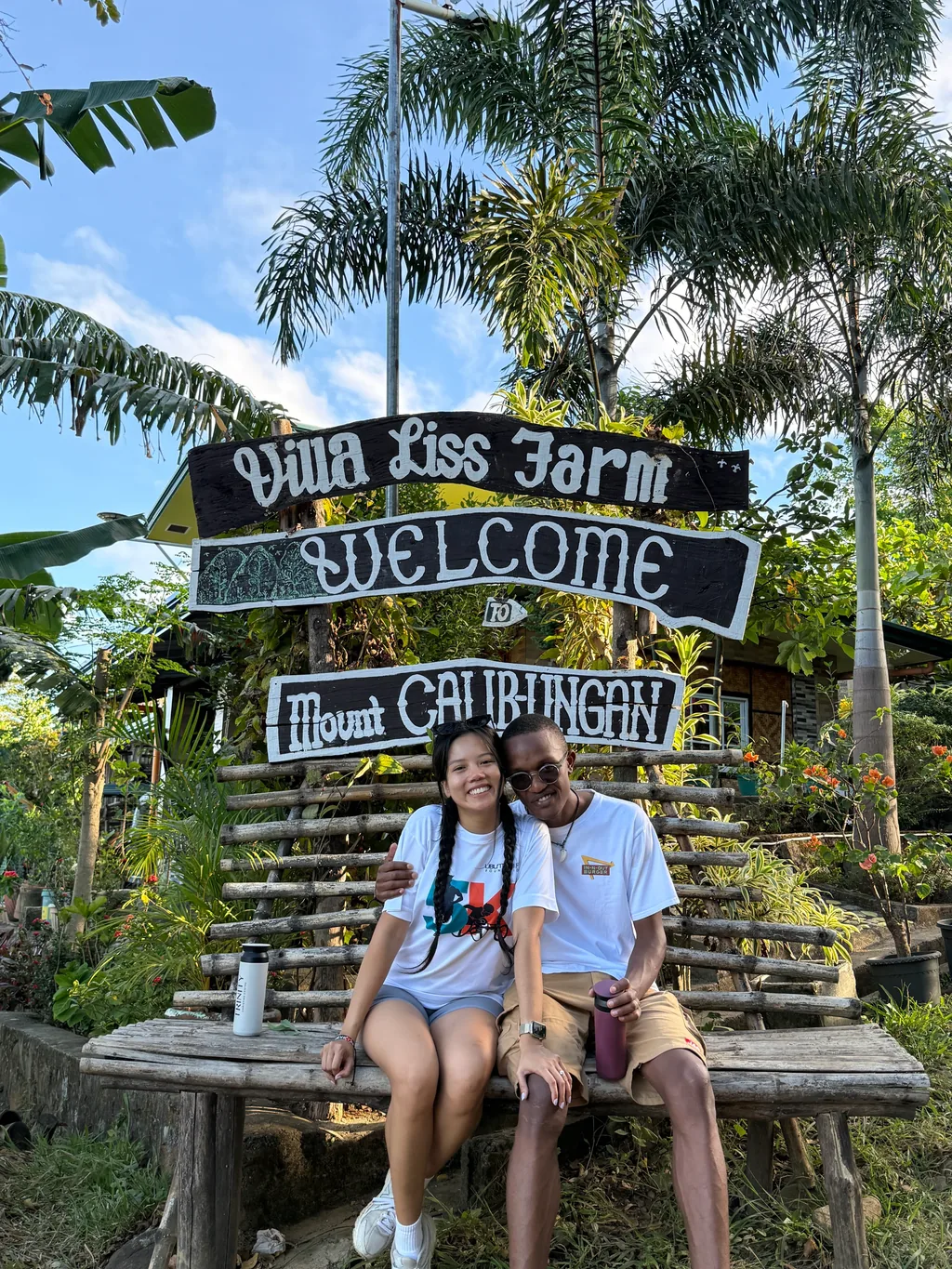
Local Stays • $30–150/nightModern condos, hillside cottages, and volcano views — many just a short drive from Narra Hill. Over 1,800 active listings in the Tagaytay area.
Browse on AirbnbDay-of Logistics
Three days at Narra Hill. Here's what each day looks like and how to get around.
Welcome Dinner
- schedule Arrive at Narra Hill by 5:30 PM
- checkroom Dress: Earth-toned smart casual
- directions_bus Shuttles from guest lodges to the Pavilion
The Wedding
- schedule Guest arrival from 11:00 AM
- favorite Ceremony begins at 3:00 PM
- celebration Reception & after-party into the evening
- checkroom Sage, emerald & brown — Kitenge or Barong encouraged
Farewell Brunch
- schedule Brunch at 10:00 AM
- airport_shuttle Shuttles to NAIA every 2 hours from 1:00 PM
- flight_takeoff Book return flights after 5:00 PM for safety
Weather & Packing
Across our three stops
Tagaytay's hills, Manila's coast, and GMA Cavite — at a glance.
June sits at the start of rainy season — warm days, brief afternoon showers, cool evenings at 660m.
Loading forecast…
Packing Essentials
- Light layers & wrap Evenings at 660m elevation get breezy
- Light rain jacket More practical than an umbrella for garden events
- Formal outfit Greens, browns, earth tones — see lookbook
- Comfortable shoes Garden paths; heels may sink into grass
- Swimwear Narra Hill has an infinity pool overlooking Taal
- Insect repellent Tropical evenings near foliage
- Sunscreen & hat Mornings are clear and sunny
- Power adapter Philippines uses Type A/B (US-style) plugs
- Medication & first aid Nearest hospital is in Tagaytay proper (~15 min)
- Some PHP cash Tricycles and small shops are cash-only
Dress Code
Sage, Emerald & BrownFormal attire. African and Filipino cultural attire encouraged.
checkroom View Lookbook
Need Assistance?
Our dedicated wedding concierge is available to help with personalised transport arrangements or accommodation queries.
mail Contact ConciergeExtend Your Stay
The Philippines is an archipelago of 7,641 islands—named after King Philip II of Spain, who never set foot here. We did, and we never wanted to leave. Here's why you shouldn't rush home either.
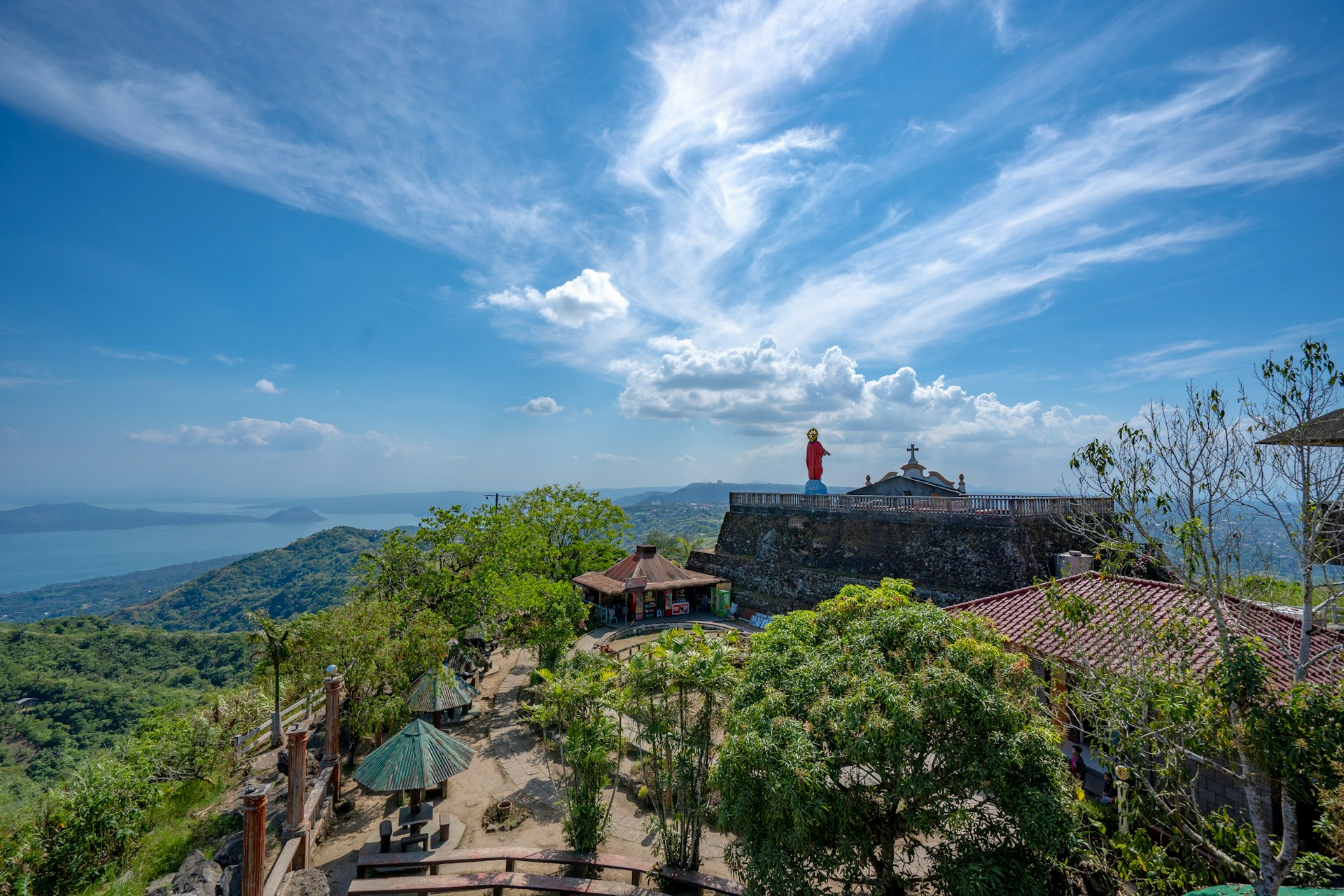
A lake, within a volcano, within a lake, within a volcano.
Taal's Crater Lake sits atop Volcano Island, which rises from Taal Lake, which itself fills an ancient caldera—making it one of the most unique geological formations on Earth.
Taal: The Volcano
That Made the Lake
Just 14 kilometres from Narra Hill sits one of the Philippines' most dramatic landscapes. Taal Volcano, the world's smallest active volcano, has erupted over 30 times since 1572—most recently in January 2020, when it sent ash plumes 14 kilometres into the sky.
Despite its fury, the area surrounding Taal is serene. The boat ride across the lake to Volcano Island takes around two hours, and the trail to the crater rim offers views that have inspired Filipino poets and painters for centuries.
Around Tagaytay
At 634 metres above sea level, Tagaytay is the Philippines' cool escape—7°C cooler than Manila, and infinitely more peaceful.
Kapeng Barako
Tagaytay's Liberica coffee is rare—only 2% of world coffee production. It's bold, woody, and grown in the volcanic soil of Batangas province since the 1700s. Try it at roadside kapehan with a view.
Bulalo Country
Tagaytay's iconic dish: slow-simmered beef shank with bone marrow, corn, and cabbage in a clear broth. Every restaurant on the ridge claims to serve the best. Locals swear by Diner's and Leslie's—decide for yourselves.
People's Park in the Sky
An unfinished mansion commissioned by Ferdinand Marcos on Tagaytay's highest point. After the 1986 People Power Revolution, it was reclaimed and turned into a public park. The 360° views of Taal Lake and Laguna de Bay are staggering.
Picnic Grove & Eco Trail
A scenic hillside park with cable cars crossing a ravine, horseback riding, and zip lines. The adjoining Eco Trail winds through mahogany forest with views overlooking the lake. Quiet on weekday mornings.
The colourful jeepneys you'll see everywhere were originally US military jeeps left behind after World War II.
Filipinos stripped them, stretched the chassis, welded on chrome horses and saints, and painted them in electric colours. They became the country's most iconic form of public transport—and a rolling work of folk art.
The Philippines Beyond Tagaytay
A country colonised by Spain for 333 years, occupied by America for 48, and invaded by Japan in WWII—yet defined by none of them. The result is a culture layered like the volcanic soil beneath your feet: resilient, vibrant, and surprisingly tender.
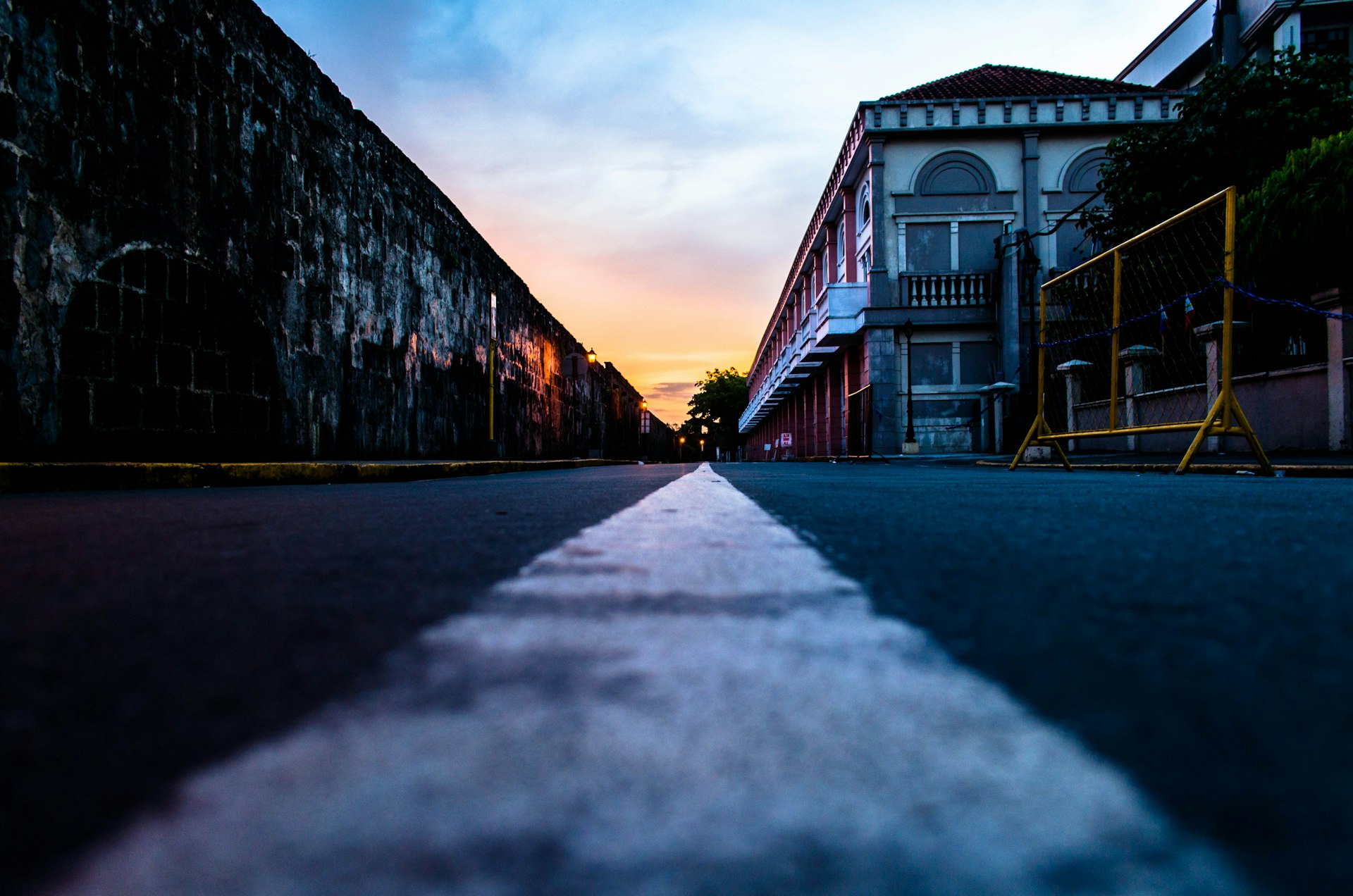
Intramuros, Manila
The walled city built by Spanish colonisers in 1571. Walk the cobblestoned streets to San Agustín Church—a UNESCO World Heritage Site and the oldest stone church in the Philippines. Nearby Binondo is the world's oldest Chinatown, established in 1594.
Batangas Coastline
Anilao is the diving capital of the Philippines—over 600 species of reef fish in waters you can wade into from shore. Further south, the beaches of Laiya and Nasugbu offer white sand without the flight to the Visayas.
Palawan
Voted the world's best island multiple times. El Nido's limestone karsts rise from turquoise lagoons. Coron's sunken Japanese WWII warships are among the world's best wreck dives. The Puerto Princesa Underground River stretches 8.2 km beneath a mountain—a UNESCO World Heritage site.
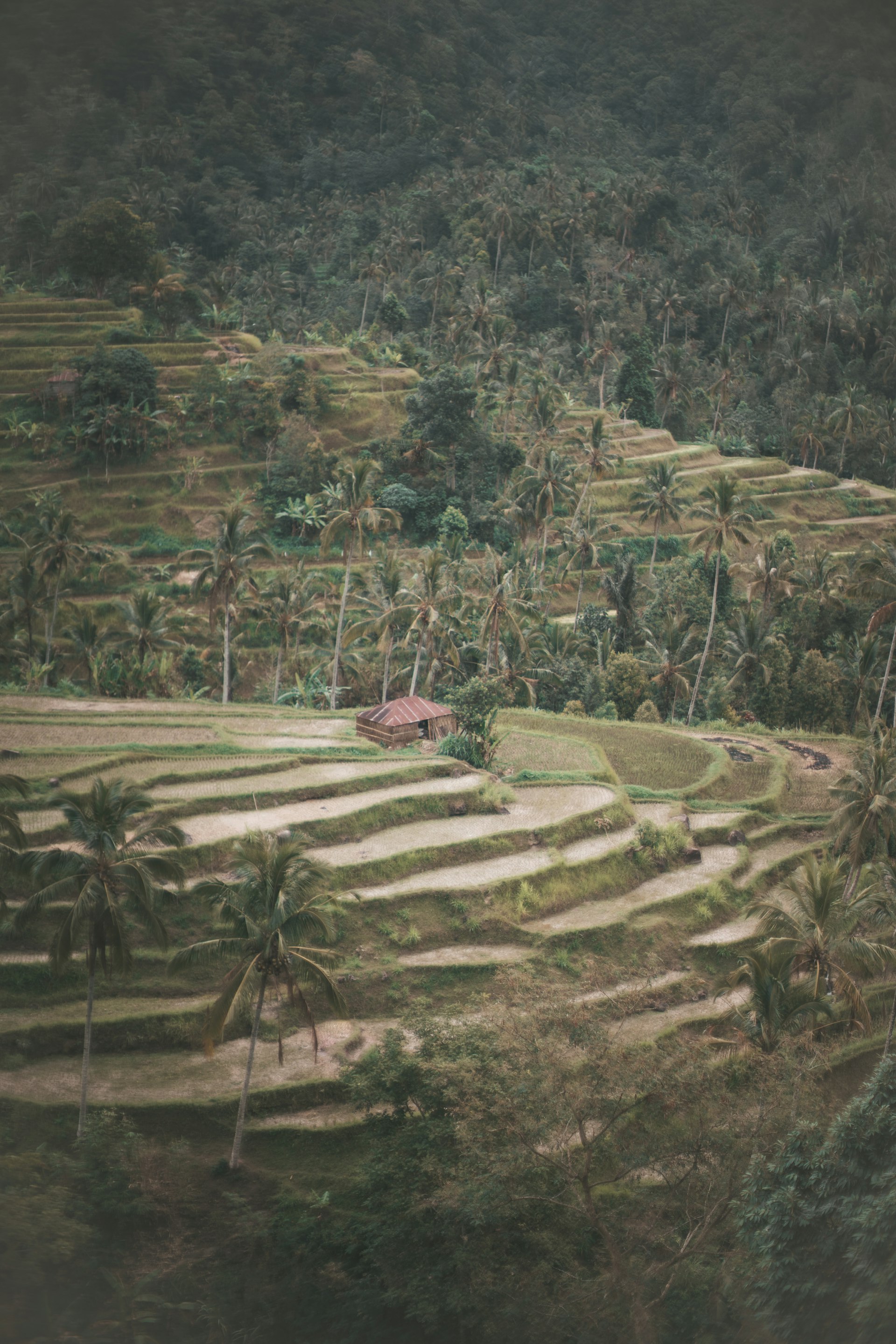
Banaue Rice Terraces
Carved into the Cordillera mountains by the Ifugao people over 2,000 years ago using hand tools and an irrigation system fed by mountain streams. If laid end-to-end, the terraces would encircle half the globe. Often called the "Eighth Wonder of the World."
Siargao
The surfing capital of the Philippines. Cloud 9 is a world-famous reef break, but the island's real draw is the pace—coconut groves, mangrove forests, tidal pools, and a community that runs on island time. Best for the couple wanting a post-wedding decompression.
Cebu & the Visayas
Where Magellan planted a cross in 1521 and claimed the islands for Spain—then was killed by Chief Lapu-Lapu two weeks later. Today Cebu is the gateway to Kawasan Falls, the whale sharks of Oslob, and the chocolate hills of neighbouring Bohol.
Things You'll Be Glad You Know
The word "boondocks" is Filipino
From bundok, meaning "mountain." American soldiers picked it up during the Philippine-American War (1899–1902) and brought it home.
The Philippine Eagle is the world's largest
Measuring up to 1 metre tall with a 2-metre wingspan. Fewer than 800 remain in the wild. Killing one carries a 12-year prison sentence.
Filipino time is a real thing
Arriving 15–30 minutes late is culturally expected in social settings. For the wedding, though—please be on time.
San Miguel Beer was first brewed here
In 1890, in a Manila brewery. It's the oldest beer brand in Southeast Asia, and still the one you'll find on every table at every celebration.